
Ask anyone who’s been building with this stuff for the last year, and they’ll tell you the same thing: agents stopped being a demo gimmick somewhere around early 2026. Not all at once. More like one quarter, it’s a cool Twitter thread, the next quarter, your support team is actually using one to close tickets.
That’s the real story here. Not some grand “AI revolution” headline, just a slow, kind of unglamorous shift where these systems started doing real work instead of impressing people in a sandbox. This piece is a rundown of where things actually stand right now, what’s improved, what businesses are doing with it, and where it’s still messy.
What Are AI Agents?
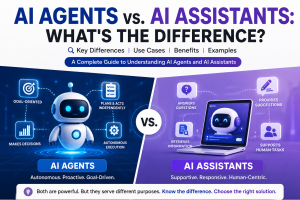
Here’s the summarized version. An AI Agents News Today takes a goal, breaks it into steps on its own, and goes and does those steps pulling data from a database hitting an API opening a browser whatever it needs until the job’s done or it gets stuck.
- AI Agents News Today takes a goal.
- Breaks the goal into steps independently.
- Executes the steps using various methods, pulling data from a database
- Hitting an API
- Opening a browser
- Continues until the job is done or encounters an obstacle.
Compare that to a regular chatbot, which just sits there waiting for your next message. The agent doesn’t wait. It decides what happens next by itself, which is honestly the whole point and also why people get nervous about handing them too much control.
Most of these are built on a language model with some memory bolted on, a loop that lets it plan multiple steps ahead, and connections out to whatever tools the task requires. None of those three pieces are new by themselves. What’s new is that they finally work together without falling apart after step four.
Latest AI Agents News Today
Things have moved fast this year, faster than a lot of people expected honestly. Several of the big labs shipped frameworks that hold context together over much longer tasks now you don’t get that thing anymore where the agent forgets what it was doing halfway through and you have to start over.
On the business side, a lot of companies that were just “testing” agents in 2025 have pushed them into actual production. Support tickets getting closed end-to-end. First drafts of reports are showing up before anyone asked. Scheduling and data entry the stuff nobody wanted to do anyway, are quietly getting handled in the background.
Not everything’s gone well though, and it’s worth saying that out loud instead of pretending it’s all smooth. Some companies rolled this out and found they’d just swapped “doing the task” for “checking whether the AI Agents News Today did the task right,” which isn’t always a time save.
Major AI Agent Breakthroughs in 2026
Enhanced Autonomous Decision-Making
This year’s agents handle messy decisions a lot better the kind where there isn’t one clean right answer. Older systems were fine with simple if-this-then-that logic but fell apart the second a task needed actual judgment.
That’s shifted. Now they can weigh a few conflicting signals and land somewhere reasonable without someone walking them through every step. Doesn’t mean they’re always right they’re just wrong less often, and they’re getting noticeably better at saying “I’m not sure” instead of guessing with false confidence.
Improved Multi-Agent Collaboration
Probably the most visible change this year. Instead of one agent trying to do the whole job, teams are splitting work across several one researches, one structures data, one drafts the output, sometimes a fourth just reviews everyone else’s work before a human sees it.
Kind of like an assembly line, and yeah, that’s basically what it is. Turns out specialized agents tuned for one narrow job tend to outperform a single agent trying to be good at everything at once.
Better Memory and Context Retention
Memory used to be the embarrassing weak spot. You’d talk to an agent Monday, come back Wednesday, and it had forgotten the entire conversation. That’s mostly fixed now newer systems hold onto relevant context across sessions, so customers don’t re-explain their issue from scratch every single time, and project assistants don’t lose the thread on decisions made three conversations back.
Sounds like a small fix. Changes a lot about how usable these things actually feel day to day.
How Businesses Are Using AI Agents
The specifics differ by industry but a few patterns keep popping up everywhere.
Customer Support Automation
This is the most mature use case by far. Agents handle the routine stuff, password resets, order status, basic troubleshooting, and pass anything genuinely tricky to a human AI Agents News Today. Response times are down. For most companies, the bigger win is that support staff stop answering the same five questions fifty times a day.
Content Creation and Marketing
Marketing teams use agents for the boring-but-necessary parts: keyword digging, first drafts, social copy variations, keeping an eye on what competitors publish. The actual strategy brand voice, what story to tell stays with people. Agents just absorb the volume work that used to eat a junior marketer’s entire week.
Software Development
Developers have probably gained the most from this. Agents write boilerplate, flag obvious bugs before a human even opens the file, generate test cases, keep docs from going stale. Hasn’t replaced engineers. Just shifted where their time goes less scaffolding, more actual design problems.
Business Operations
Quieter stuff happens here. Scheduling conflicts get resolved automatically, status reports get pulled together without someone manually copying numbers between spreadsheets at 5pm on a Friday. Not flashy. Adds up to real hours saved though.
Industry Trends Driving AI Agent Adoption
Growing Demand for Intelligent Automation
Budgets are tight pretty much everywhere right now, and workloads keep growing faster than headcount. Agents fill that gap — not by replacing people outright, but by soaking up the repetitive parts of a job so the existing team covers more ground without burning out.
Integration with Enterprise Systems
Agents used to sit off in their own little corner, disconnected from whatever software a company actually used day to day. That’s changing AI Agents News Today. They’re plugging straight into CRMs, project trackers, internal chat tools, now less manual copy-pasting between “what the AI figured out” and “where the business actually keeps its data.”
Rise of Personalized AI Assistants
Nobody wants a generic tool; they have to re-train every single session. The agents gaining real traction are the ones that remember how a person works how they like their reports formatted, what shortcuts they always reach for, what they tend to ask first thing in the morning.
Expansion Across Industries
Tech got the early-adopter spotlight, sure. But healthcare, manufacturing, logistics, and education are catching up fast now. A hospital’s scheduling system and a marketing agency’s content pipeline look nothing alike on the surface, but under the hood, they’re increasingly running on the same basic agent tech.
Challenges and Considerations
It’s not all smooth, and pretending otherwise would be dishonest.
Data Privacy and Security
Agents often need access to sensitive stuff to actually be useful customer records, internal docs, financial numbers. That access has to be locked down properly. A lot of organizations are still building the governance to do this right, instead of just bolting an agent onto existing systems and hoping nothing leaks.
Reliability and Accuracy
An agent that’s confidently wrong is harder to catch than one that’s obviously broken. Companies are learning the hard way that they need actual human checkpoints not just a quick skim of the output before it ships out the door AI Agents News Today.
Ethical Considerations
The more autonomy an agent gets, the harder it becomes to answer basic questions: who’s responsible when it makes a bad call? How much should the people affected even know about how the decision got made? There’s no industry-wide answer yet. Just a lot of companies quietly making their own rules as they go.
The Future of AI Agents
Hard to say exactly where this lands, but the direction seems pretty clear agents are going to keep getting better at reasoning through messy, ambiguous problems, working alongside other agents without needing a human referee at every turn, and burrowing deeper into the actual systems businesses run on instead of sitting awkwardly next to them.
The companies that figure out how to deploy this properly, actually reworking how they operate around what agents are good at, instead of just bolting one on to look modern, are probably going to end up with a real edge over everyone still treating it like a side experiment.
Conclusion
2026 is the year this stopped being a demo and started being plumbing. Real infrastructure. The progress on decision-making, multi-agent teamwork, and memory has made these systems genuinely more useful than they were even twelve months ago, and adoption’s spreading well past the tech companies that got there first AI Agents News Today.
That said, privacy, reliability, and accountability, those problems aren’t going anywhere just because the tech keeps improving. Anyone actually trying to use this well needs to keep both sides in view: what agents can do now, and what still needs a careful human hand on the wheel.
Frequently Asked Questions
What are AI agents?
Software that plans and carries out tasks on its own rather than just answering one prompt at a time pulling in tools, making calls, adjusting as the task unfolds instead of waiting for the next instruction AI Agents News Today.
Why are AI agents important in 2026?
Because they’re finally reliable enough for real workloads, not just flashy demos. That frees people up to spend their time on the parts of a job that actually need human judgment.
Which industries benefit most from AI agents?
Customer service, software development, and marketing are furthest along right now. Healthcare, logistics, and finance are closing the gap faster than most people expected though.
Can AI agents replace human workers?
Mostly, no. They take over the repetitive slice of a job, not the whole job. Anything involving real judgment, relationships, or genuine creativity is still firmly human territory and probably will be for a while.
What is the future of AI agents?
More autonomy, smoother collaboration between multiple agents working together, and deeper integration into the software businesses already run on less of a bolted-on tool, more of a built-in layer nobody really thinks twice about.