“Will this take your job?” That’s the headline every time a new AI tool launches. Fair question, honestly. But it’s also the wrong one for most people reading this in 2026. Here’s a better question: how do you actually work with it as a coworker, rather than fearing it or pretending it doesn’t exist?
I keep coming back to this because the people getting real value out of it right now aren’t the ones treating it as a threat or a toy, for that matter. They’re treating it like a teammate. That’s really what this guide is about, even if you’ve never touched one of these tools before.
What “AI as a coworker” Actually Means
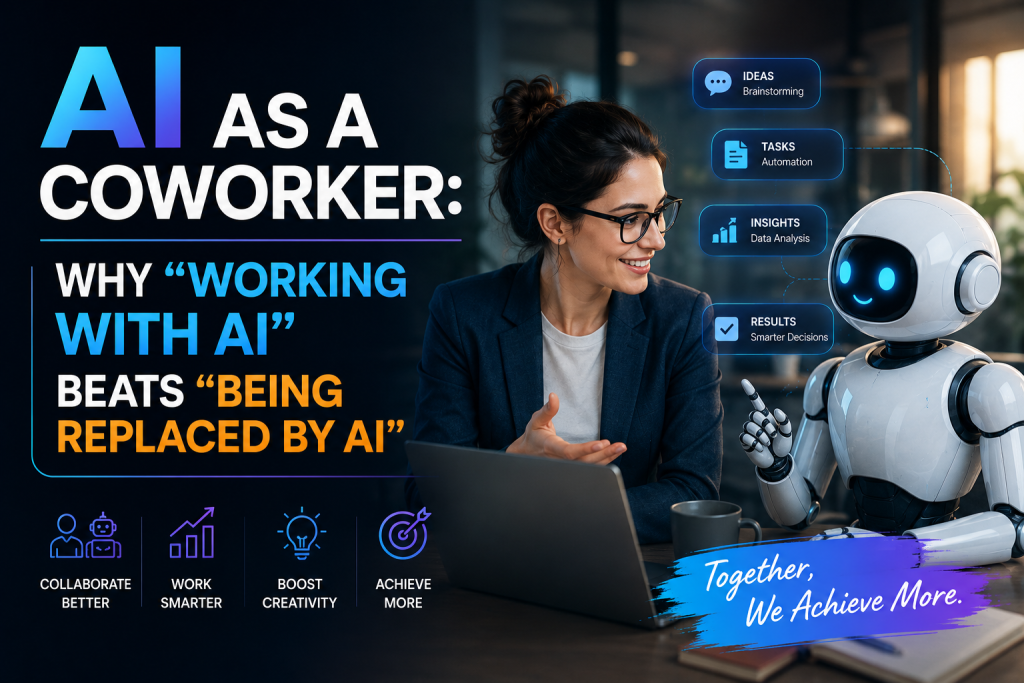
Picture a good AI as a coworker. They take a task off your plate without being micromanaged, ask a question when something’s unclear, and free you up to focus on the stuff only you can do. That’s the role a decent assistant is starting to play. Not a replacement for your judgment support for it.
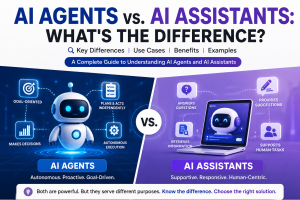
Here’s the distinction, and it matters more than it sounds: a basic tool sits there waiting for instructions and does exactly one thing, no more. A coworker carries a task from start to rough finish on its own, flags anything weird along the way, and hands it back for you to look at. The assistants people are using today increasingly act like the second kind research, first drafts, scheduling, cleaning up messy data while you handle whatever actually has stakes attached.
None of this means the technology “gets” your job the way a human colleague would. What it means is simpler: it can take the repetitive 70% off your hands so you’ve got energy left for the 30% that actually needs your brain.
And not every task qualifies, by the way. You’d hand off a report draft. You wouldn’t hand off a hiring decision. The real skill is figuring out which is which, how much a task depends on context only you have, versus how much of it is just pattern repetition. That second bucket is bigger than most people assume.
Why This Mindset Shift Matters for Beginners
If you’re just starting out, the “AI as a coworker” framing actually works against you. It pushes people toward one of two bad habits either avoiding the tools altogether, or dumping tasks on them and trusting whatever comes back without a second look.
Neither one AI as a coworker. What actually AI as a coworker is smaller and more boring than people expect: pick one repetitive task, let an assistant take the first crack at it, then check it before it goes anywhere that matters.
Take a small business owner who lets an assistant draft replies to the customer emails she gets every week the same three or four questions, over and over. She still rewrites the tone, still decides what the customer actually needs to hear. It didn’t replace that judgment. It just got rid of the blank page she used to be staring at every morning.
Or take a freelance designer juggling ten pages of scattered client feedback. Instead of reading through all of it twice, she asks for it boiled down into three action items first. She’s still the one deciding what changes in the actual design. The tool just saved her an hour of hunting through comments for the parts that mattered. Different jobs, same pattern: the human keeps the part that needed real understanding, and hands off the part that was basically clerical.
What Actually Changes When You Adopt This Mindset
A few things shift once you stop thinking “this might replace me” and start thinking “this AI as a coworker next to me.” For one, you stop expecting a perfect result on the first try — you wouldn’t expect that from a new hire either, so why expect it here? You also start building the habit of a quick check instead of swinging between blind trust and total avoidance. And you get more specific about what you’re asking for, because a vague request gets you a vague draft. Same as it would with a person.
None of this is about lowering the bar. It’s about understanding that the real value sits in the back-and-forth — first pass, check it, fix it — not in whatever comes out the first time. Skip the checking step and you’re asking for trouble. Skip delegating altogether and you’re leaving time on the table. Both miss the point.
Where AI Coworkers Are Already Useful
You don’t need a technical background for any of this. A few places people are already starting:
- Writing and editing — first drafts of emails, social posts, product descriptions, which you then polish for tone
- Research and summarizing — pulling the key points out of long articles, reports, or piles of customer feedback
- Scheduling and admin — calendar invites, meeting agendas, the follow-up note you’d otherwise put off
- Customer support — the routine, repeated questions, with a person stepping in for anything sensitive
- Brainstorming — a wide first pass of headlines, names, angles, that you then cut down to the good ones
Same pattern every time: it does the rough first pass, you make the call that matters. That’s not a smaller version of your job AI as a coworker it’s a sharper one. What’s left for you is the part that actually needed a person in the first place.
How to Start Working With AI This Week
Forget the strategy document. Just pick one task you already do every week AI as a coworker something repetitive, but not so automatic that it doesn’t need any thought, and not so specialized that only you could ever do it. Email replies, a weekly report, a content outline. Any of those works as a starting point.
For the next two weeks, hand the first draft of that one task off before you touch it yourself. Ask for a draft, read it, fix what’s wrong, and pay attention to what you keep having to fix. That’s the real signal AI as a coworker, it tells you exactly where the help is solid and where you still need to be hands-on, which is worth a lot more than any general advice you’ll read about “strategy.”
And don’t feel pressure to hand off more just because you technically can. Some weeks it’ll be one task. Other weeks, once you’ve got a feel for it, maybe three or four. There’s no magic ratio here AI as a coworker the right amount is whatever actually frees up time for the work only you can do.
Treat this as a coworker instead of a replacement, and how you use it changes AI as a coworker along with how much you actually get out of it. A tool waits around for orders. A coworker carries the task forward and lets you focus where you’re actually needed. Start small: one task, one assistant, one round of checking. That’s how you find out what this relationship is actually good for.
If you’re just getting started, pick one task today, try handing it off, and see what’s different a week from now.